
The B2B eCommerce Blueprint Logo
THE B2B ECOMMERCE BLUPERINT

The Structured Approach Behind Every Groove Engagement

The B2B eCommerce Blueprint is the structured system The B2B eCommerce Agency  uses to plan, build, and implement modern B2B commerce systems for manufacturers and distributors.

Modernizing B2B eCommerce isn’t just about choosing the right tools. It requires making the right decisions — in the right order — while protecting the business, the team, and the customer experience along the way.

The Blueprint provides the structure for doing exactly that.

ChatGPT Image Jan 13, 2026, 10_41_46 AM 1 (1)

When the Blueprint Becomes Necessary

The B2B eCommerce Blueprint was developed to address a pattern we've has seen repeatedly inside manufacturing and distribution companies.

Organizations begin modernizing digital commerce with the right intentions, but critical decisions often happen out of sequence. Platform choices are made before the business model is fully understood. Integration work begins before pricing logic and customer workflows are clearly defined. Teams move quickly to build, only to discover later that key assumptions were incomplete.

The result is a system that technically launches but fails to meaningfully change how customers buy or how the business operates.The Blueprint exists to prevent those outcomes by guiding organizations through the work in the right order.

The Operating System Behind How Groove Works

The B2B eCommerce Agency doesn’t separate strategy from execution. The B2B eCommerce Blueprint is the operating system we use to guide B2B commerce work from initial assessment through implementation and ongoing optimization. It governs how we:
Magnifying Glass Icon

Assess your current state

Understand the systems, workflows, and constraints shaping how your business operates today.

Light Bulb Icon

Create clarity before commitments

Define the business model, priorities, and assumptions that should guide major decisions.

Stepping Blocks Icon

Plan the work responsibly

Sequence initiatives so teams can move forward with confidence.

B2B eCommerce Systems Diagram

Build and integrate systems

Implement platforms and integrations that support how customers actually buy.

Shield Icon

Manage risk during implementation

Surface conflicts early so teams can adjust before problems become expensive.

B2B Portal Success Dashboard Icon

Measure success after launch

Track adoption, performance, and the operational impact of the system.

There isn’t one process for planning and another for delivery. The same system guides consulting, implementation, and ongoing optimization.

That’s how accountability stays clear — and why surprises get smaller instead of bigger.

The Blueprint Lifecycle

The B2B eCommerce Blueprint follows a structured lifecycle designed to guide organizations through modernization in the right sequence.

Each phase builds on the one before it — helping teams reduce uncertainty, validate decisions early, and move forward with clarity as systems, workflows, and customer experiences take shape.The lifecycle provides the structure that keeps strategy, implementation, and optimization aligned from start to finish.
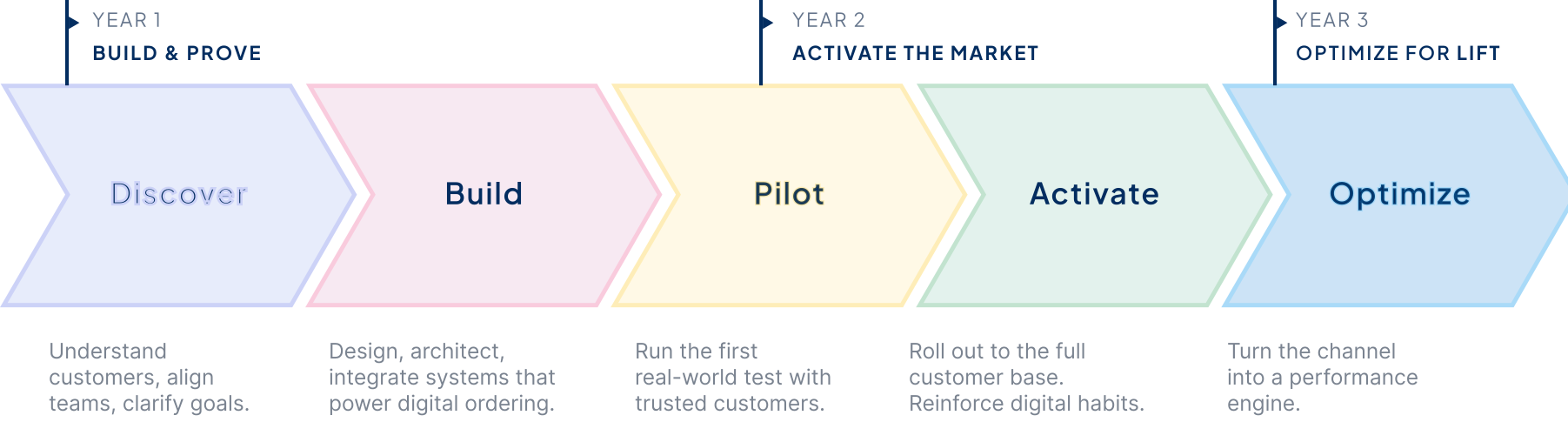
The Blueprint Lifecycle
Most organizations enter the Blueprint at different points, but the sequence always matters.

Five Stages Every Successful B2B eCommerce Initiative Moves Through

Successful B2B eCommerce initiatives tend to follow the same stages. Most organizations experience them eventually — just not in the right order.

The Blueprint makes the sequence clear and intentional.

Discover

Clarity Before Commitment

What happens here:

  • Leadership aligns on goals and priorities

  • Teams separate real problems from noise

  • Decisions slow down before money is committed

Why it matters: The wrong decisions are expensive to unwind.

Outcome: Shared clarity across leadership before execution begins.

Pilot

Confidence Before Exposure

What happens here:

  • Real customers begin using the system

  • Weak points surface early

  • Adjustments are made before scale

Why it matters: Adoption is validated before anything is rolled out broadly.

Outcome: Confidence backed by real usage and data.

Optimize

Growth Without Chaos

What happens here:

  • Performance is measured and improved

  • Automation and efficiency compound over time

  • Growth is guided by data, not guesswork

Why it matters: You improve what’s already stable instead of constantly rebuilding.

Outcome: Sustained ROI and a stronger, more resilient business.

Build

Execution With Context

What happens here:

  • The solution architecture is finalized and built

  • Systems, data, and workflows are integrated

  • Business processes are translated into working infrastructure

Why it matters: The platform fits how the business runs — not the other way around.

Outcome: A working system ready for real use.

Activate

Making Digital Default

What happens here:

  • Digital becomes the normal way work gets done

  • Old processes are replaced rather than worked around

  • Teams are supported as behavior changes

Why it matters: Access doesn’t equal adoption. Habits do.

Outcome: Customers and teams begin using digital by default.

Discover

Clarity Before Commitment

What happens here:

  • Leadership aligns on goals and priorities

  • Teams separate real problems from noise

  • Decisions slow down before money is committed

Why it matters: The wrong decisions are expensive to unwind.

Outcome: Shared clarity across leadership before execution begins.

Build

Execution With Context

What happens here:

  • The solution architecture is finalized and built

  • Systems, data, and workflows are integrated

  • Business processes are translated into working infrastructure

Why it matters: The platform fits how the business runs — not the other way around.

Outcome: A working system ready for real use.

Pilot

Confidence Before Exposure

What happens here:

  • Real customers begin using the system

  • Weak points surface early

  • Adjustments are made before scale

Why it matters: Adoption is validated before anything is rolled out broadly.

Outcome: Confidence backed by real usage and data.

Activate

Making Digital Default

What happens here:

  • Digital becomes the normal way work gets done

  • Old processes are replaced rather than worked around

  • Teams are supported as behavior changes

Why it matters: Access doesn’t equal adoption. Habits do.

Outcome: Customers and teams begin using digital by default.

Optimize

Growth Without Chaos

What happens here:

  • Performance is measured and improved

  • Automation and efficiency compound over time

  • Growth is guided by data, not guesswork

Why it matters: You improve what’s already stable instead of constantly rebuilding.

Outcome: Sustained ROI and a stronger, more resilient business.

ChatGPT Image Jan 13, 2026, 10_41_46 AM 1 (1)

Start at the Beginning.
Respect the Sequence.

The best outcomes happen when the work begins in the right place.

Most companies come to Groove before major decisions are locked — when there’s still time to slow down, align leadership, and choose the right path forward. That’s where the Blueprint is most effective.

Sometimes parts of the system already exist.

  • A portal that never became the default
  • Digital tools that launched but never fully adopted
  • Systems that work individually but not together

When that happens, Groove doesn’t rush past the early stages. We begin by creating clarity — understanding what’s working, what isn’t, and what needs to happen next before moving forward with execution.

The starting point may reflect your current reality. But the sequence always begins with clarity.

That’s how risk stays controlled — and why progress actually sticks.


The Rules That Govern the System

The Blueprint is guided by a small set of rules learned through years of helping manufacturers and distributors modernize digital commerce. These principles keep the work grounded in how the business actually operates — and prevent teams from rushing into decisions that are expensive to unwind later.

Clarity before commitment

 Major decisions aren’t locked until the business model, systems, and workflows are clearly understood.

Adoption before optimization

Work moves forward in the right order so progress stays steady instead of chaotic.

Proof before scale

Technology should support how the company actually operates, not force teams into artificial processes.

Evidence over assumption

New systems prove themselves with real users before broad rollout.
 Once the system is stable, performance, automation, and growth can compound over time. Together, these rules keep the work focused, predictable, and accountable from discovery through long-term optimization.

Start With Clarity

Before discussing scope, timing, or investment, one question matters most: Where are you in the system?

The most responsible place to begin is understanding your revenue blind spots, operational constraints, and readiness for change.Start with the book, then schedule a leadership consultation to map the right next step.